
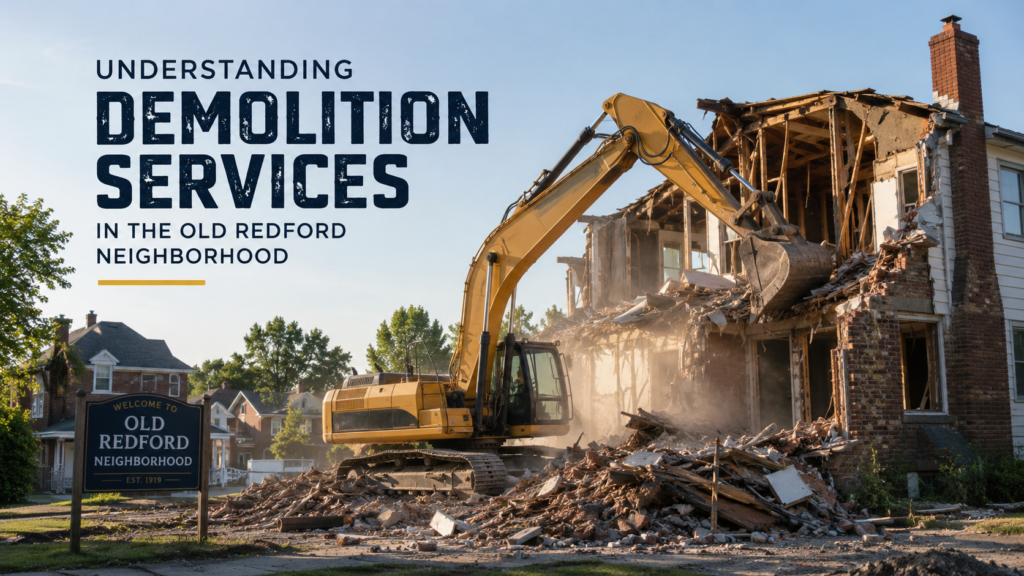
Old Redford is a historic neighborhood on Detroit’s northwest side, known for its rows of early 20th-century bungalows and its proximity to Grand River Avenue. Like many long-established Detroit neighborhoods, Old Redford includes a mix of well-maintained homes, properties in active renovation, and structures that have deteriorated over time. Demolition Contractor Old Redford in this context often plays a role in community revitalization, clearing the way for rehabilitation, new construction, or simply the safe removal of structures that are no longer stable. This guide explains what that process generally involves.
The Role of Demolition in Neighborhood Revitalization
In neighborhoods like Old Redford, demolition is frequently tied to broader efforts to stabilize and improve the housing stock. Removing a severely deteriorated or unsafe structure can eliminate a safety hazard, reduce blight, and open up a lot for future redevelopment or green space. At the same time, many homes in the neighborhood are structurally sound and simply in need of renovation rather than removal, which is why an accurate structural assessment is such an important first step.
Old Redford’s proximity to Grand River Avenue, one of the city’s major commercial corridors, also means that demolition decisions on residential blocks are sometimes considered alongside broader planning discussions about the corridor’s future, since stabilizing surrounding housing can support the success of nearby commercial revitalization efforts as well.
Assessing Older Bungalow-Style Homes
Old Redford’s housing stock is largely made up of early 20th-century bungalows, many of which share common construction methods from that era, including balloon framing and older masonry techniques. A thorough assessment evaluates the structural integrity of the home, checks for water or fire damage, and identifies whether the building is a candidate for renovation versus full demolition.
Because balloon-frame construction can allow fire to spread more quickly through wall cavities than modern framing methods, homes with a history of fire damage in Old Redford sometimes require a more cautious structural evaluation before a final demolition decision is made.
Permitting Requirements
Demolition within the City of Detroit requires a permit, and the process can include additional review depending on the property’s history, whether it is city-owned or privately held, and its location relative to any planned neighborhood improvement projects. Utility disconnection is also required before any physical demolition begins, ensuring gas, electric, and water service are properly capped.
Properties that have been through prior code enforcement action sometimes have additional documentation requirements as part of the permitting process, so it can help to check a property’s enforcement history with the city before finalizing a demolition timeline.
Hazardous Material Considerations
Because most of the structures in Old Redford predate modern building material regulations, a hazardous materials survey is a standard and important step before demolition. This typically checks for asbestos in siding, insulation, and flooring, as well as lead-based paint, both of which were common in homes built during the early to mid-20th century. Any hazardous materials identified must be properly abated before mechanical demolition proceeds.
Detached garages and small outbuildings common on Old Redford lots are also worth including in this review, since they were frequently built using the same era-appropriate materials as the main house.
Demolition Methods for Aging Structures
For structures that are beyond renovation, mechanical demolition is typically used to safely bring down the building. Because many homes in the neighborhood sit close to one another, extra care is taken to protect adjacent structures during the process, including dust suppression and careful planning of how the structure is brought down. Debris is sorted on-site to separate recyclable materials like wood, metal, and masonry from general waste.
Addressing Vacant and Unsafe Structures
Vacant homes that have been unoccupied for an extended period often require additional precautions during demolition, including a more detailed structural assessment given the potential for deterioration, water damage, or instability that can develop over time. These extra steps help ensure the demolition is carried out safely for both the crew and the surrounding neighborhood.
In some cases, long-vacant homes have also experienced partial material scrapping, such as removed plumbing or wiring, which can leave a structure more unstable than its exterior condition might suggest. A careful interior assessment before demolition helps identify these hidden risks ahead of time.
Site Cleanup and Future Use
After demolition, the site is graded and cleared of debris, leaving the lot ready for its next use, whether that is new construction, community green space, or simply a stable, well-maintained vacant lot. Proper grading also helps prevent drainage issues that can affect neighboring properties over time.
Signs a Bungalow May Be Beyond Renovation
Given the age of Old Redford’s housing stock, a few structural indicators commonly help determine whether a bungalow is a genuine renovation candidate or has deteriorated to the point that demolition is the more realistic option. These include significant foundation settling common in early 20th-century balloon-frame construction, extensive water damage from long-term roof failures, and structural framing that has been compromised by pest activity or prolonged vacancy. Homes that have sat unoccupied for extended periods often show faster deterioration, since routine maintenance and climate control are no longer in place.
Mechanical Demolition vs. Selective Deconstruction
For structures that are beyond renovation, mechanical demolition using an excavator is typically the most efficient way to complete the teardown. When original architectural details, such as trim, doors, or built-in cabinetry, hold value or historical interest, a more selective, hand-based deconstruction approach may be used to salvage those materials before the rest of the structure is removed mechanically.
How Seasonal Weather Affects Scheduling
As with other communities in Southeast Michigan, seasonal weather affects when larger demolition projects are scheduled in Old Redford. Frozen ground during winter months can make excavation and grading more difficult, which is why many property owners and organizations plan larger teardown projects for the spring through fall months whenever the timeline allows for that flexibility.
Working Alongside Community Organizations
Old Redford has an active network of community and block club organizations that are often involved in neighborhood improvement efforts, including identifying properties in need of attention and advocating for their safe removal when renovation is no longer a realistic option. Property owners and contractors working in the neighborhood sometimes coordinate with these organizations, particularly on projects tied to broader block-level revitalization efforts rather than a single, isolated property.
Balancing Demolition With Preservation of Neighborhood Character
Even amid ongoing revitalization work, Old Redford’s bungalow-style architecture remains a defining feature of the neighborhood. As a result, demolition decisions here are often made with an eye toward what comes next for the block as a whole, not just the individual lot. In some cases, this means a structure beyond saving is removed to make way for new construction that reflects the neighborhood’s existing scale and character, rather than a dramatically different building type.
What Happens on Demolition Day
Once permitting, utility disconnection, and any needed hazardous material abatement are complete, the physical teardown of a typical bungalow is often finished within a day or two. Crews take extra care with structures situated close to occupied neighboring homes, using dust suppression and careful sequencing to minimize disruption to the block. Vacant structures with significant deterioration sometimes require additional time due to the added precautions needed when working around compromised framing.
After the Structure Comes Down
Following the main demolition, remaining steps typically include foundation removal, backfilling the excavation, and confirming all utility connections are capped below grade. Final grading levels the lot and helps manage drainage, an important step whether the site will become part of a community green space initiative, be sold for redevelopment, or simply be maintained as a stable vacant parcel.
Frequently Asked Questions
Is a permit required to demolish a home in Old Redford? Yes, demolition within Detroit requires a city permit, and additional review may apply depending on the property’s specific circumstances.
How are older bungalow homes assessed before demolition? A structural assessment evaluates the home’s framing, foundation, and any damage to determine whether renovation or full demolition is the appropriate path.
Do older Old Redford homes typically contain asbestos or lead paint? Many do, given the age of the housing stock, which is why a hazardous materials survey is a standard step before demolition begins.
What happens to a lot after a home is demolished? The site is graded and cleared, leaving it ready for future redevelopment, green space, or ongoing maintenance depending on the owner’s plans.
How does demolition support neighborhood revitalization? Removing unsafe or severely deteriorated structures can reduce blight and create opportunities for redevelopment or community-focused land use.
Are there resources available for property owners dealing with a deteriorated structure? Many Detroit neighborhoods, including Old Redford, have community organizations and city programs focused on blight remediation, which can be a useful starting point for property owners unsure of their options.
Can a homeowner request that certain materials be salvaged before a demolition crew begins work? Yes, this should be discussed and confirmed with the contractor before the project starts, since crews generally treat unspecified materials left in the structure as debris.
Property owners in the neighborhood can research a demolition contractor working in Old Redford to better understand how the process addresses the area’s historic bungalow housing stock and ongoing revitalization efforts.